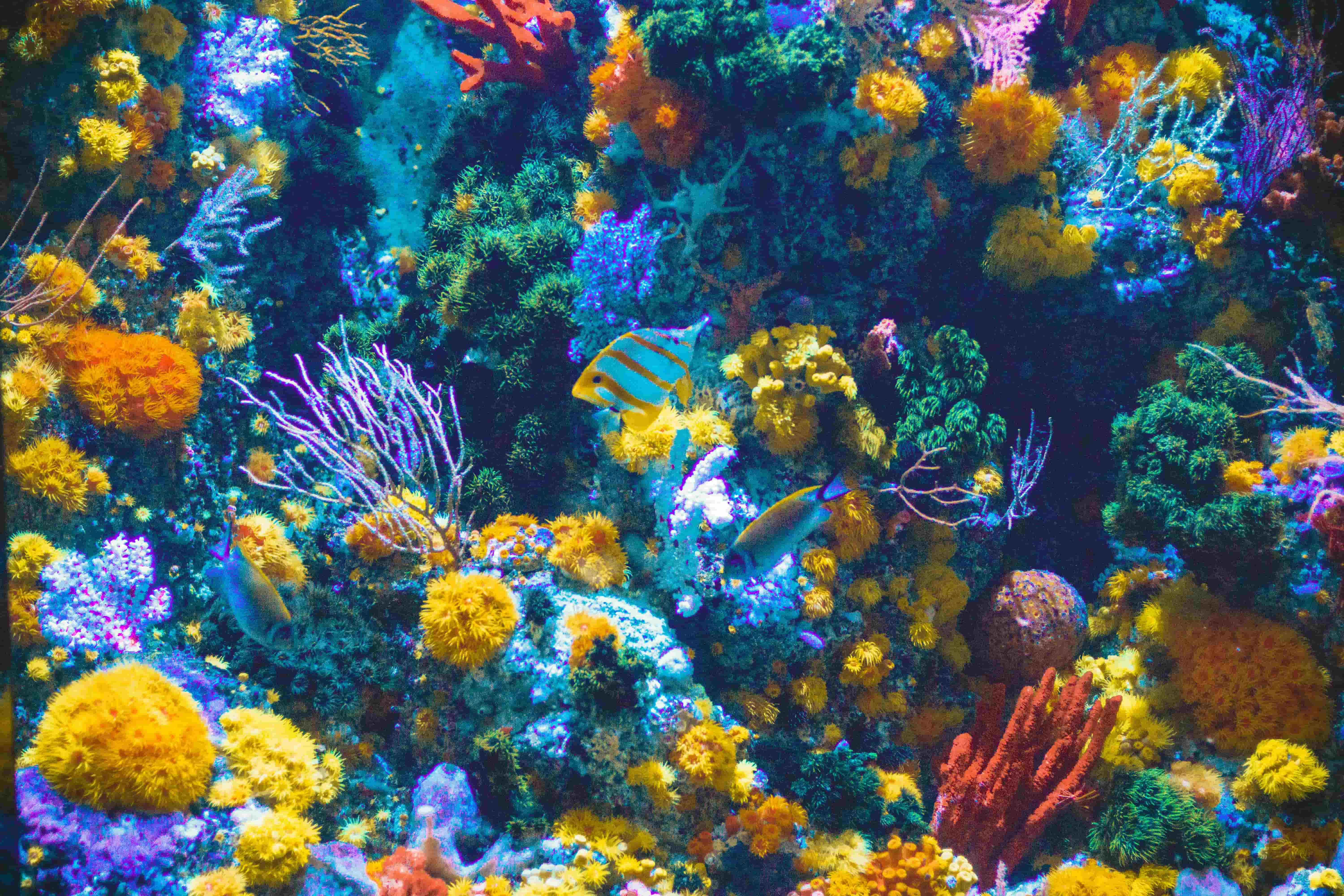
You have arrived at the most diverse marine environment on Earth! Coral reefs comprise less than 1% of the total area of the ocean floor, but they account for over 25% of all marine species. Explore these shallow, warm areas to see a vibrant diversity of life and colour.
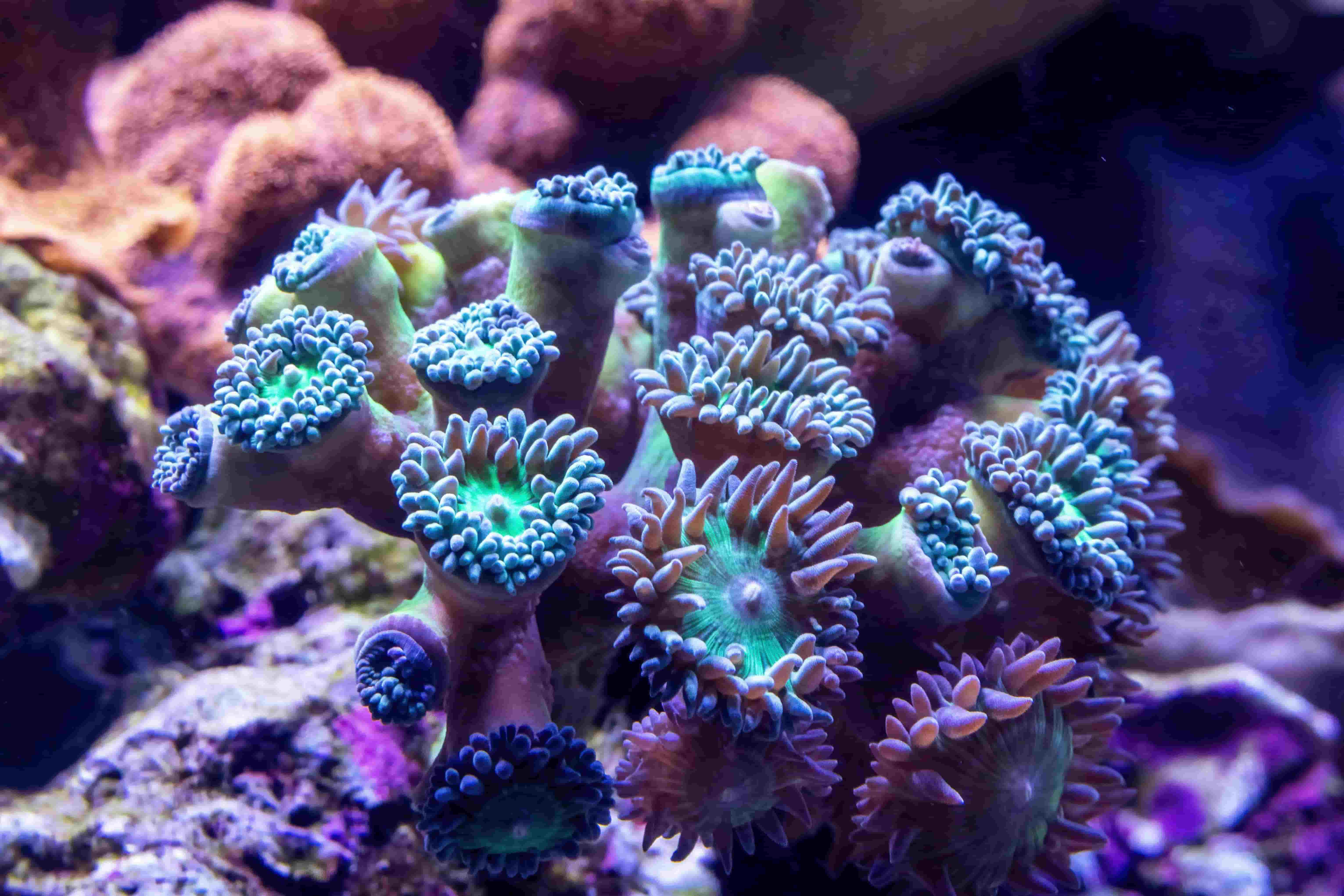
A Beautiful Sea Anemone! While they may appear to be colourful plants, anemones are actually animals belonging to the same family as jellyfish. They can use their stinging tentacles to capture passing fish or plankton.
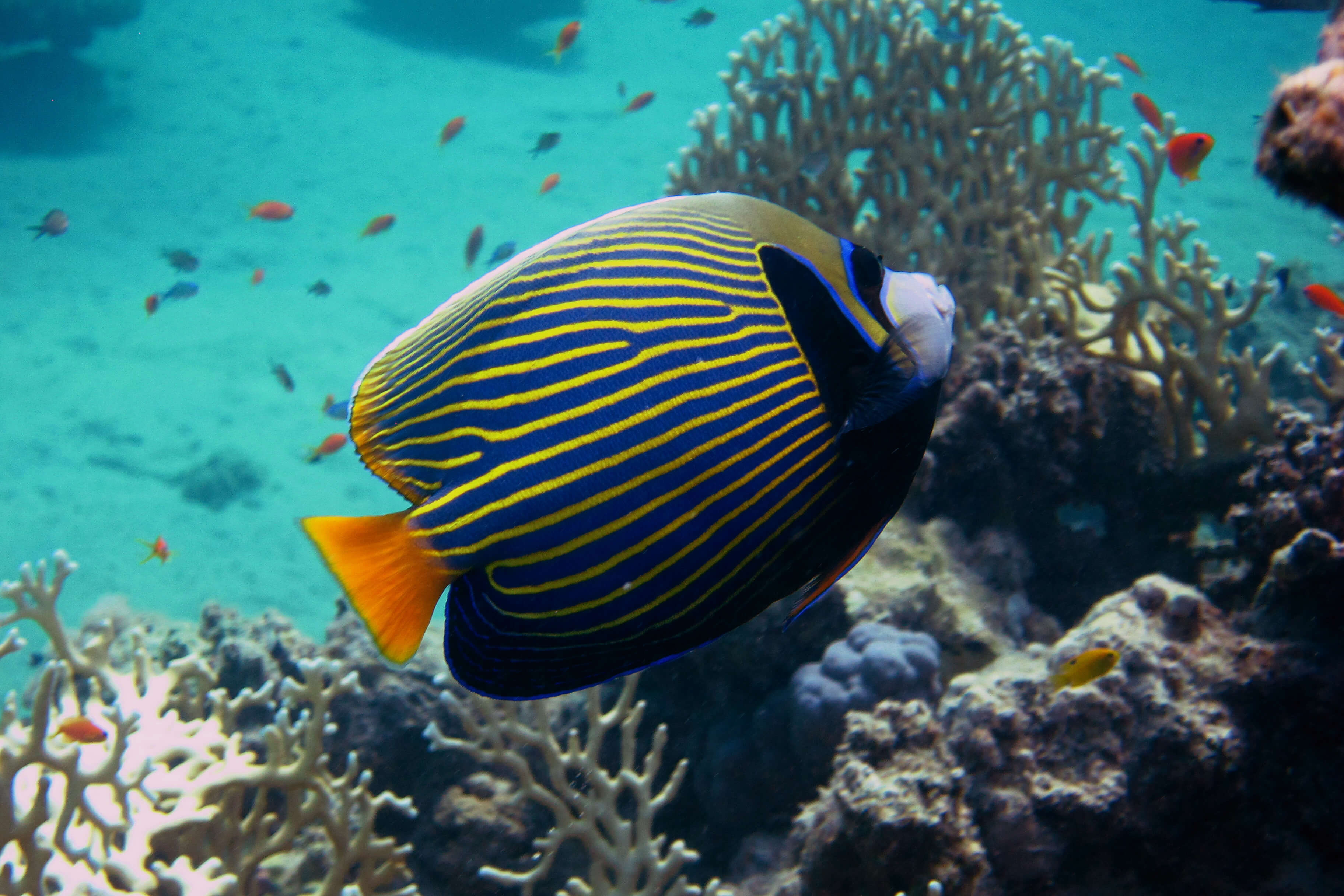
These fish are an important part of the colourful reef ecosystem and have beautiful blue and yellow horizontal stripes on their bodies. They change from a dizzying assortment of circles to a simple stripe as they age.
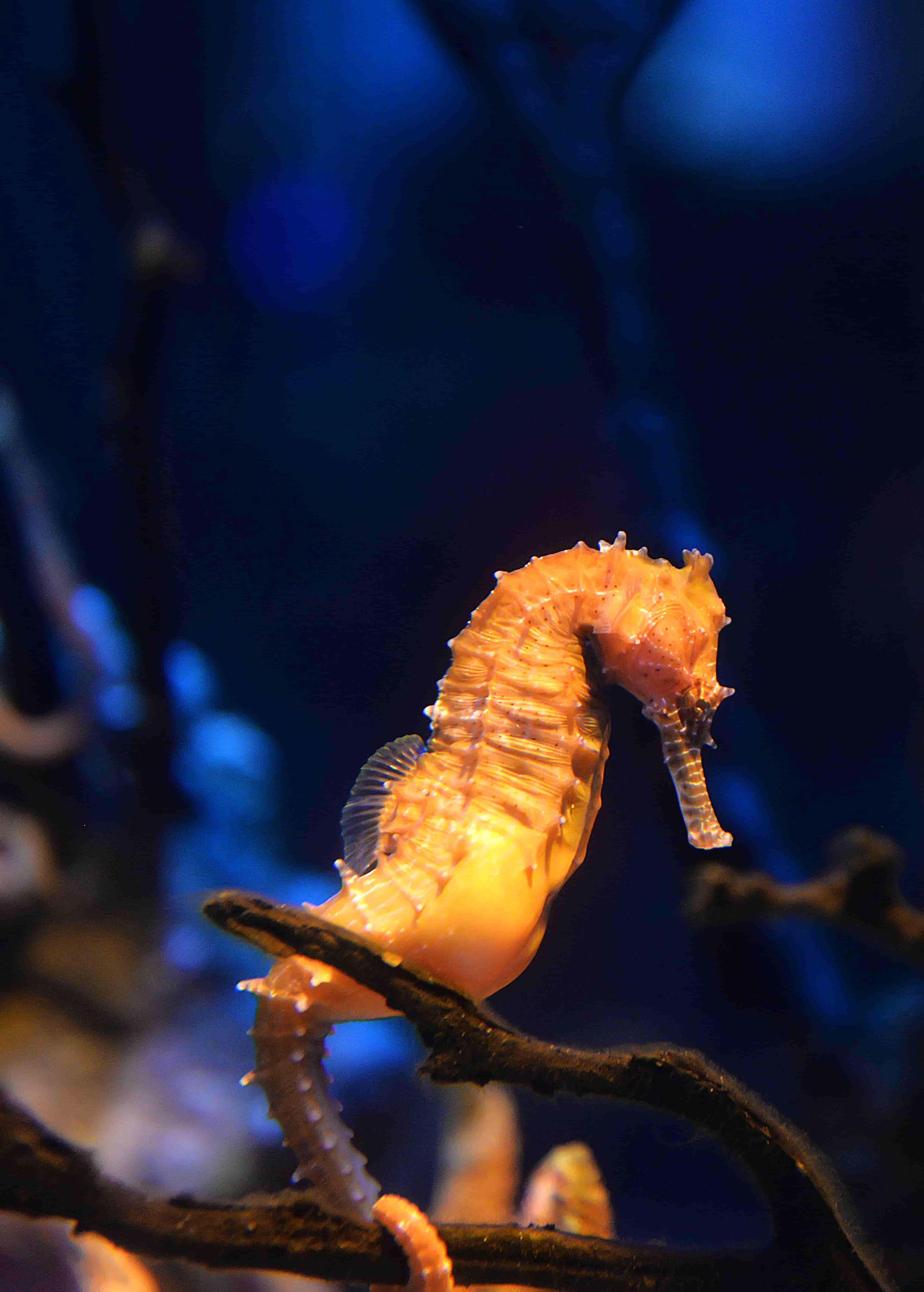
The yellow seahorse uses its prehensile tail to anchor itself to coral or seagrass to avoid drifting into the current, making it the ultimate trickster of the sea. Uniquely, it is the male seahorse that gives birth to and takes care of the young seahorses!

Beautiful, but ferocious, lionfish have beautiful maroon and white stripes with very venomous spines protruding from their dorsal fins; they are ferocious predators, and they corner their prey with their large pectoral fins.
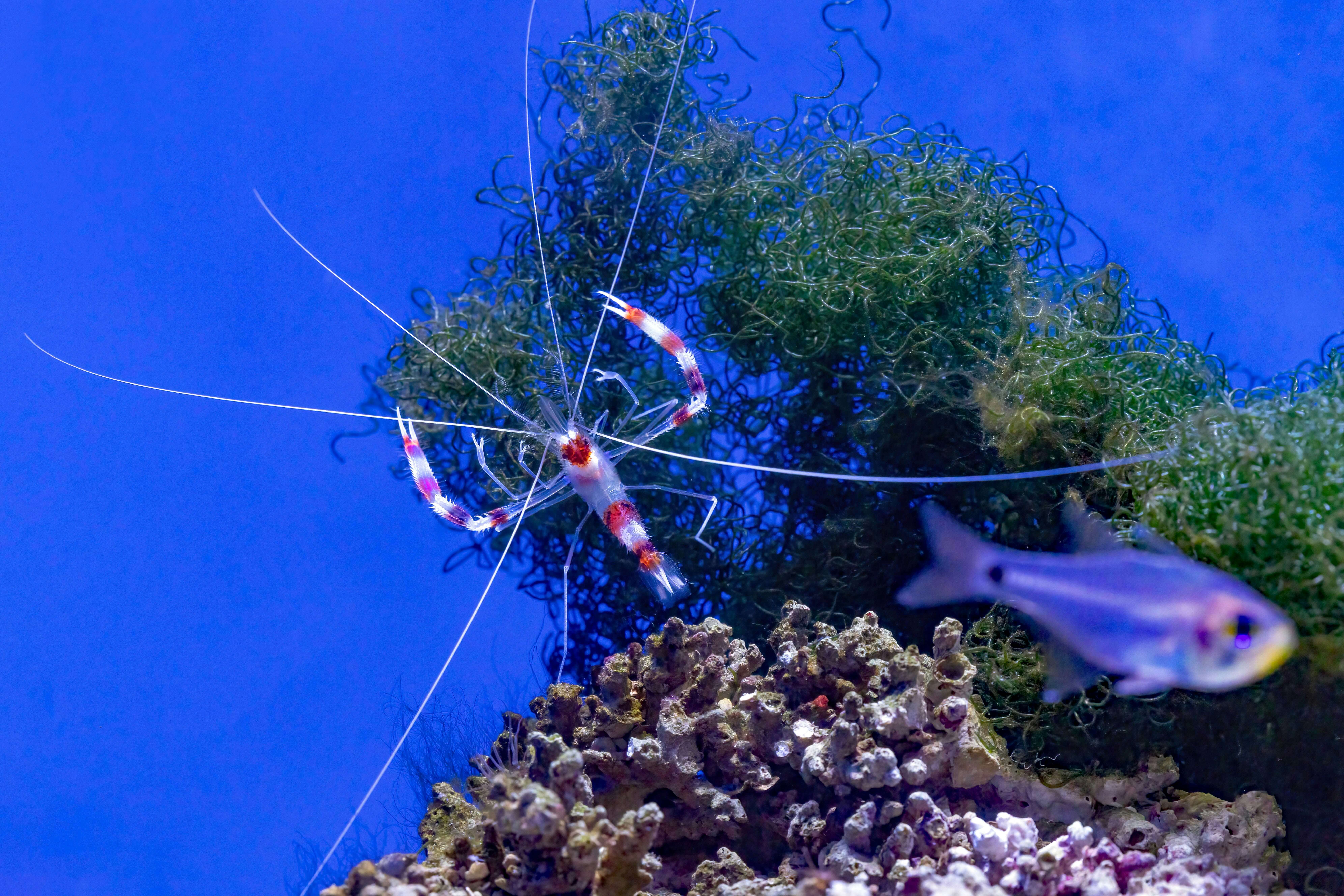
These littlest crustaceans fish (particularly cleaning stations (by picking off dead tissue from their scales and gills all operate off a reef)). AND; they will wait very courteously while the shrimp tend to their needs!!!
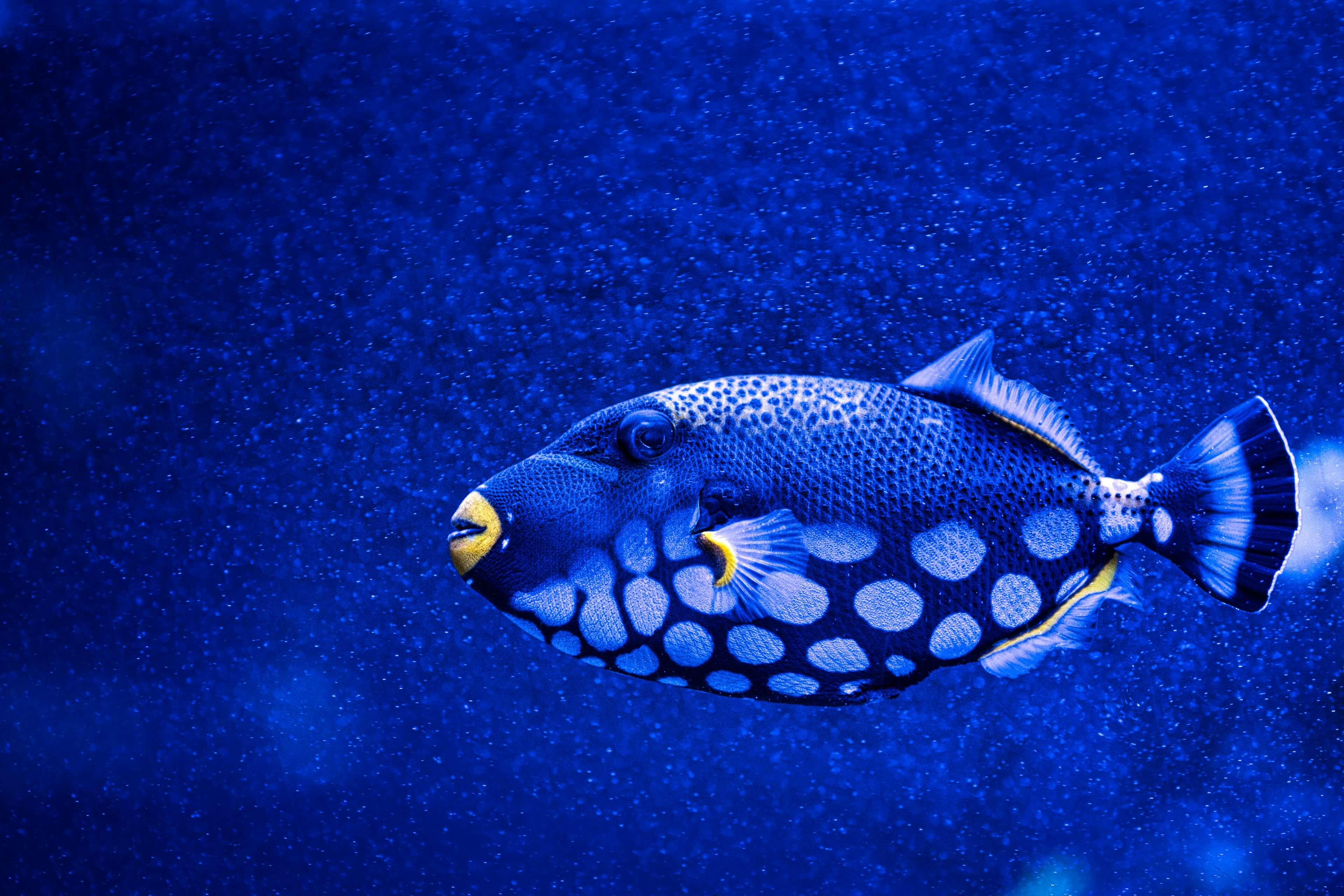
Clown Triggerfish are easily identified by their bold, spotted patterns. Their powerful jaws allow them to crush the hard shells of the mollusks and crustaceans they consume. Furthermore, they are very territorial animals!
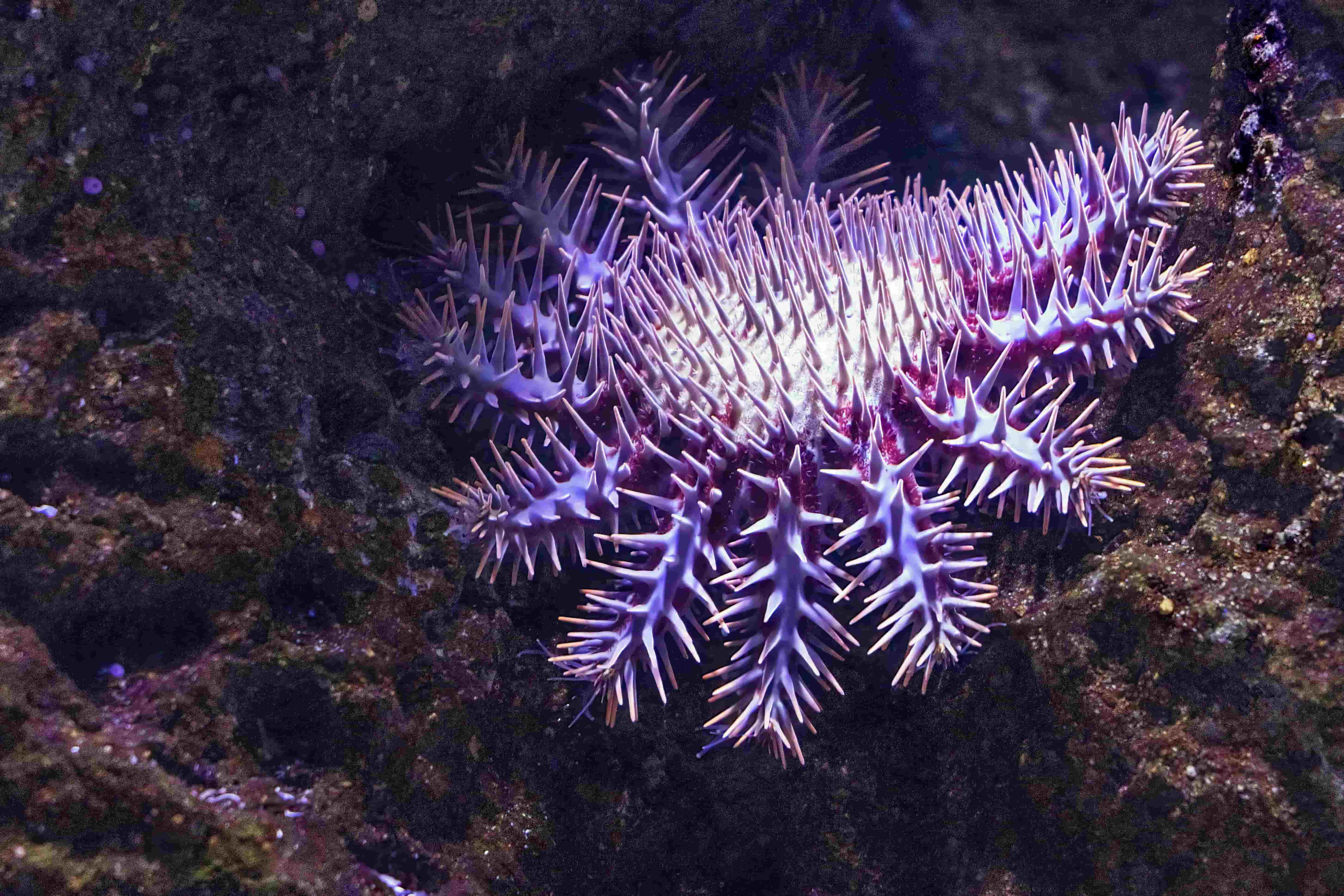
Crown-of-Thorns Starfish are large starfish that feed on coral and are covered in venomous spikes. The way they eat is to extend (push) their stomachs out of their bodies and into the coral in order to digest the coral's living tissues); leaving behind only the coral skeleton.
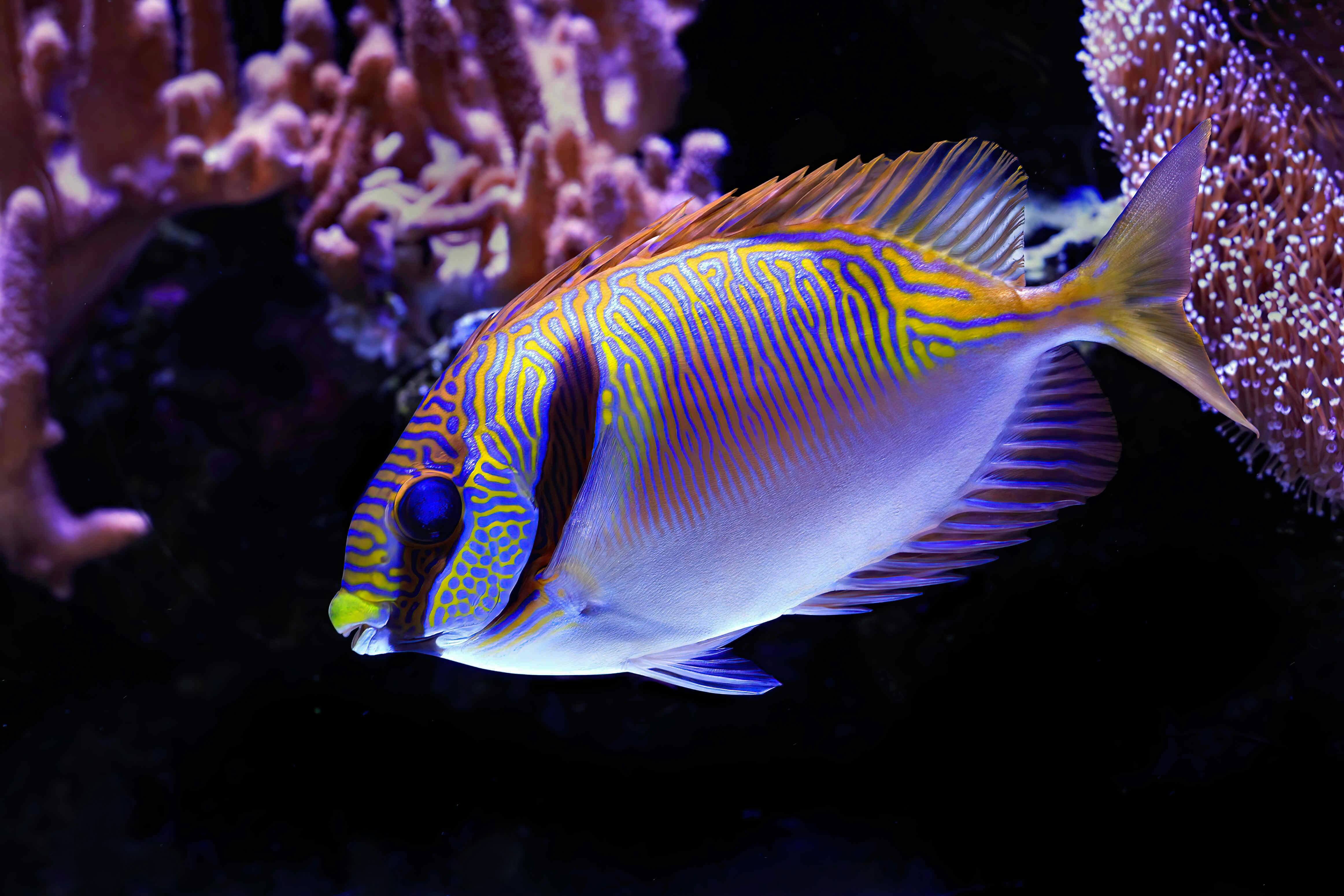
Rabbitfish received their name based upon their shape. They play an important role in maintaining the health of coral reefs by eating algae that would otherwise grow and kill off the slow-growing coral polyps.
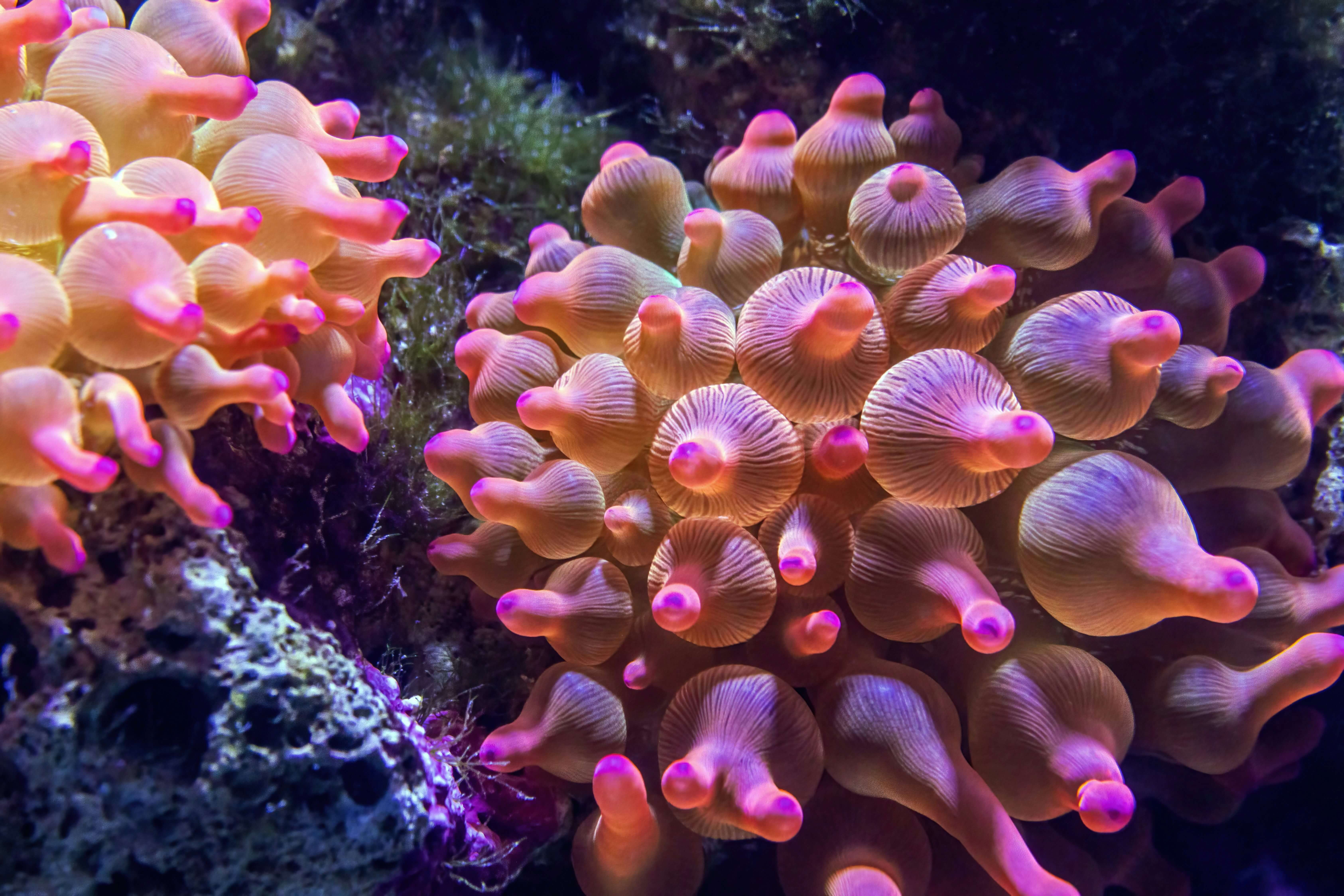
Bubbles are how Bubble-Tip Anemones were given their name (due to the fact that they have bulbous or bubble-like tips on their tentacles). They provide clownfish with a safe place to live and in return clownfish provide them with food through feeding them.
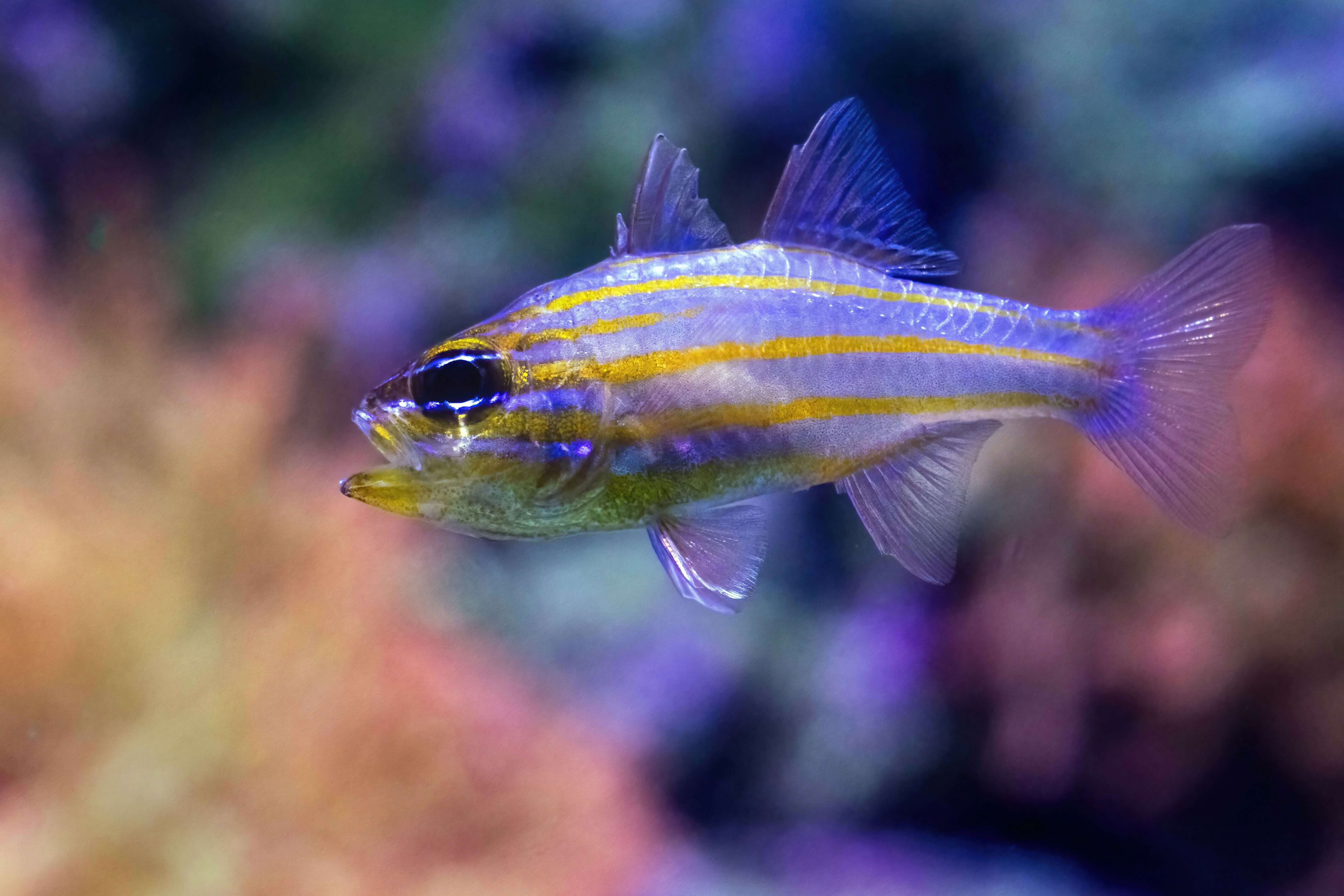
The Banggai Cardinalfish is an elegant striped fish that is a mouthbrooder; the male Banggai Cardinalfish will retain the fertilized eggs in his mouth until they are mature enough to hatch and then release them to protect the eggs from being eaten by other fish.
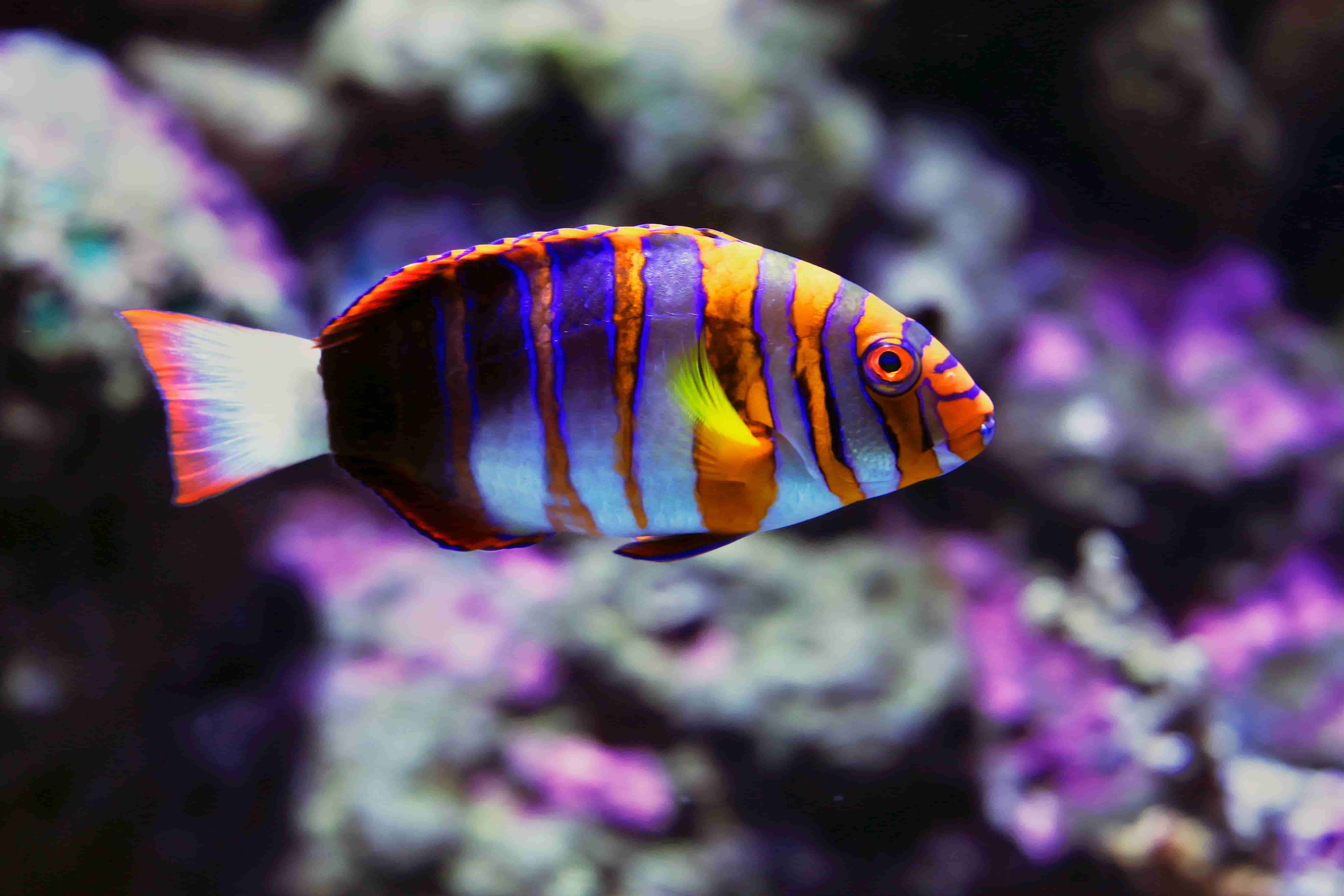
The Harlequin Tuskfish, with its brilliant coloration and blue teeth, is a wrasse that uses its tusks to excavate rocks and crack open the shells of crabs and sea urchins living on the reef bottom.
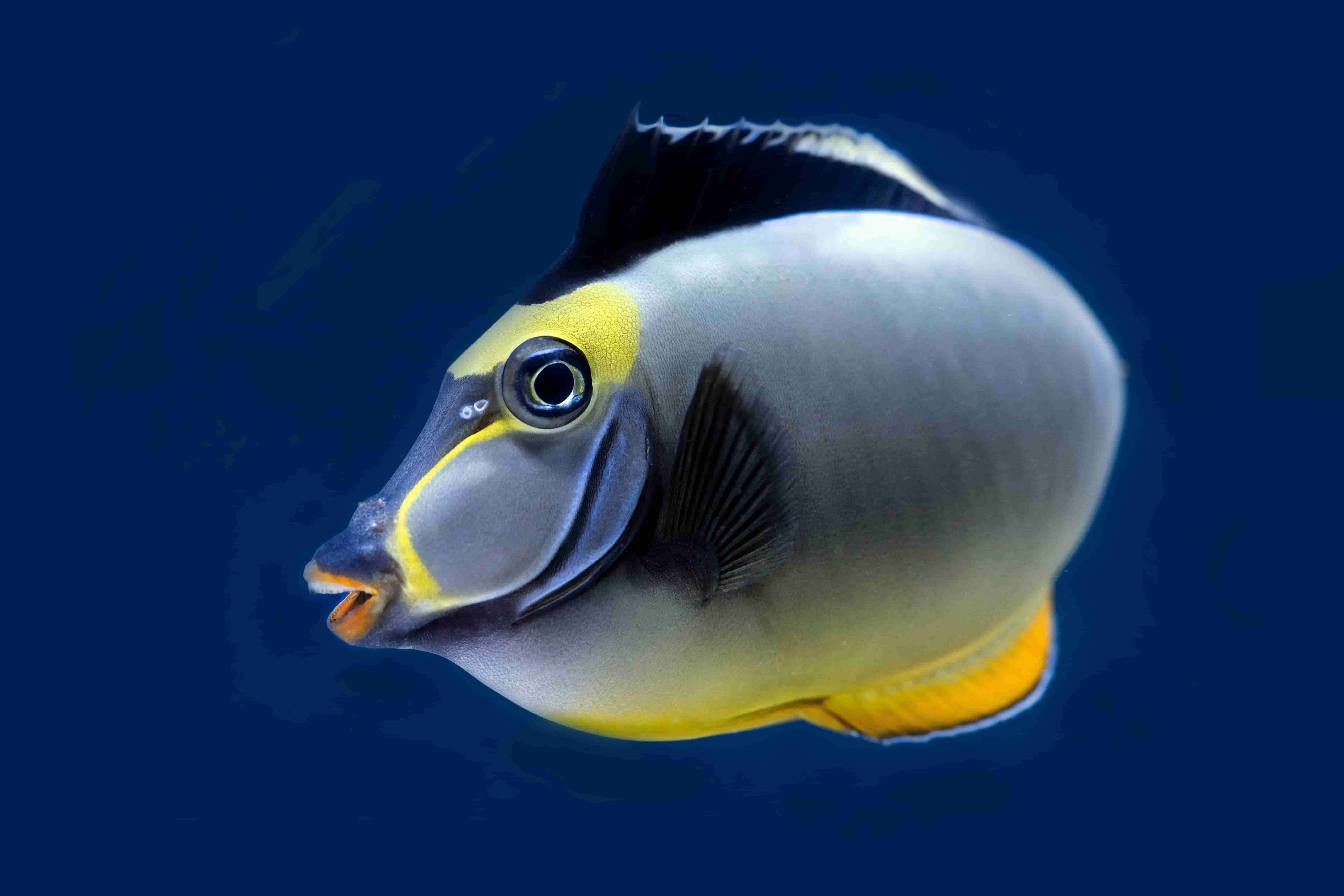
The Lipstick Tang, also known as the Naso Tang, is named for its bright orange-colored lips; like all surgeonfish, the Lipstick Tang has sharp, scalpel-like blades along the base of its tail to use as a defense mechanism.
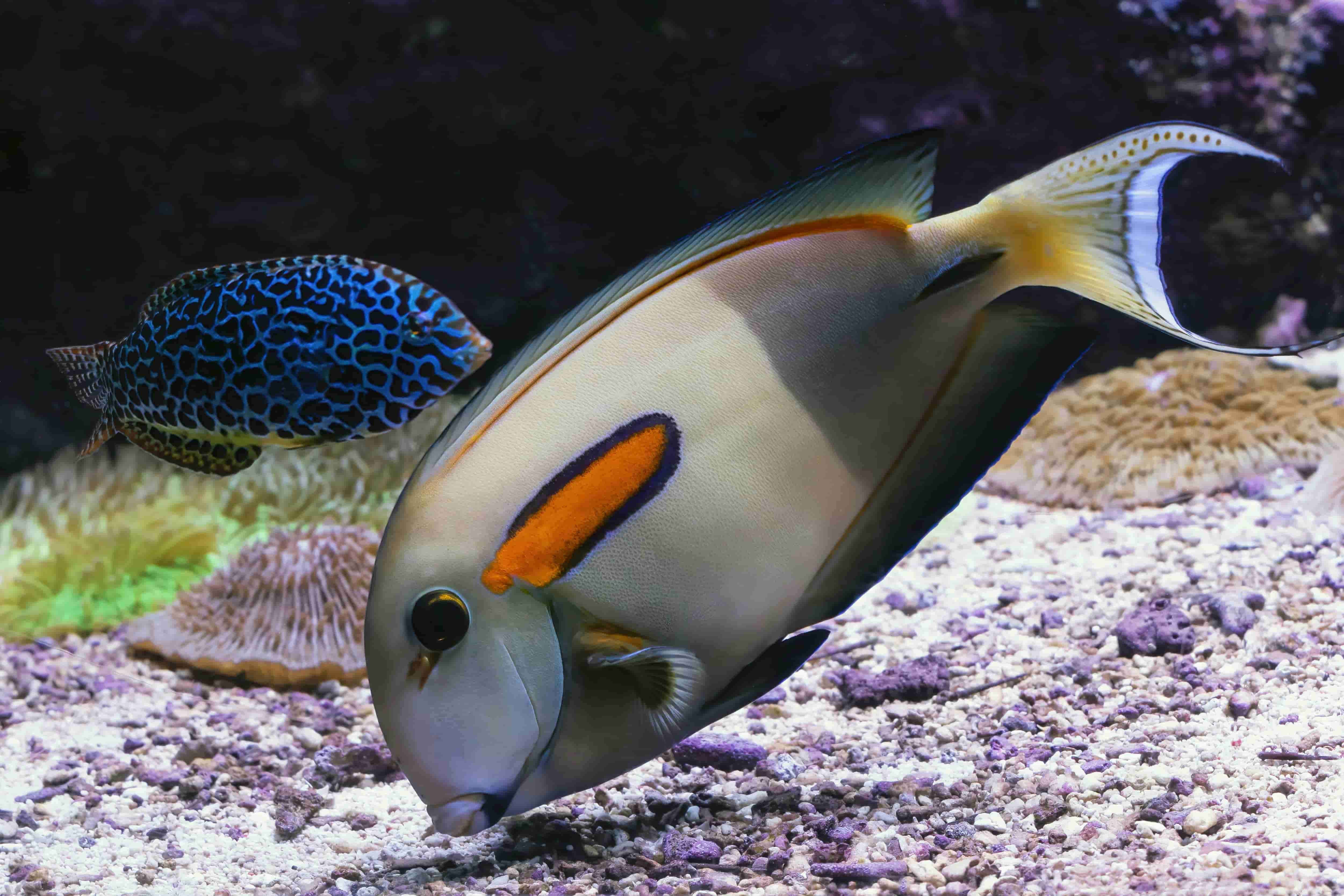
The Orangeblotch Surgeonfish is an extremely fast swimmer, darting from one location to another while grazing on algae. The coloration of the Orangeblotch Surgeonfish allows it to easily camouflage itself in the dappled light that permeates the shallow water of the reef.
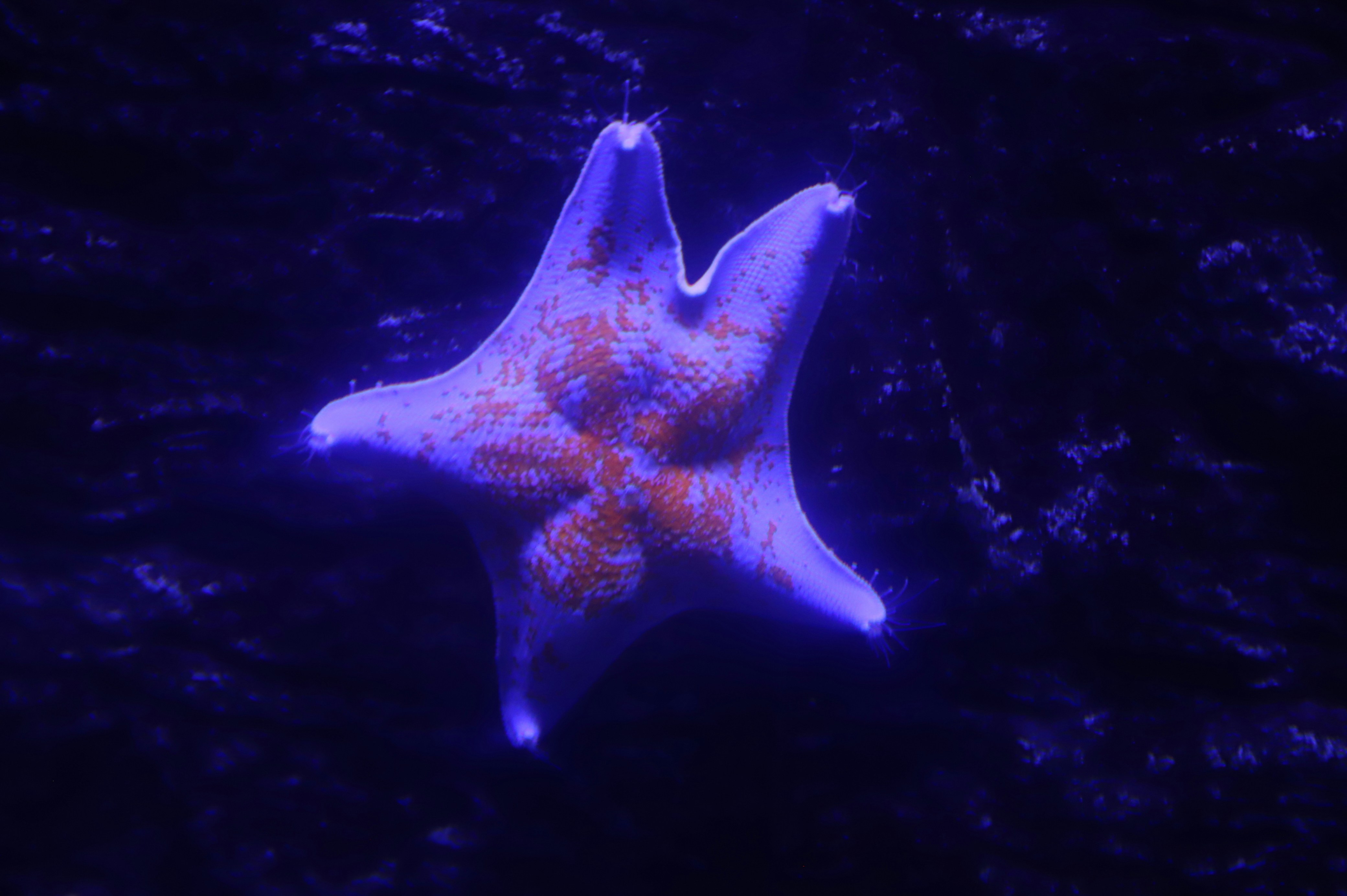
Purple Sea Stars do not possess blood; they instead use seawater filtered through their nervous system to function. If they lose an arm due to predation, Purple Sea Stars have the unique ability to regenerate their lost limbs.
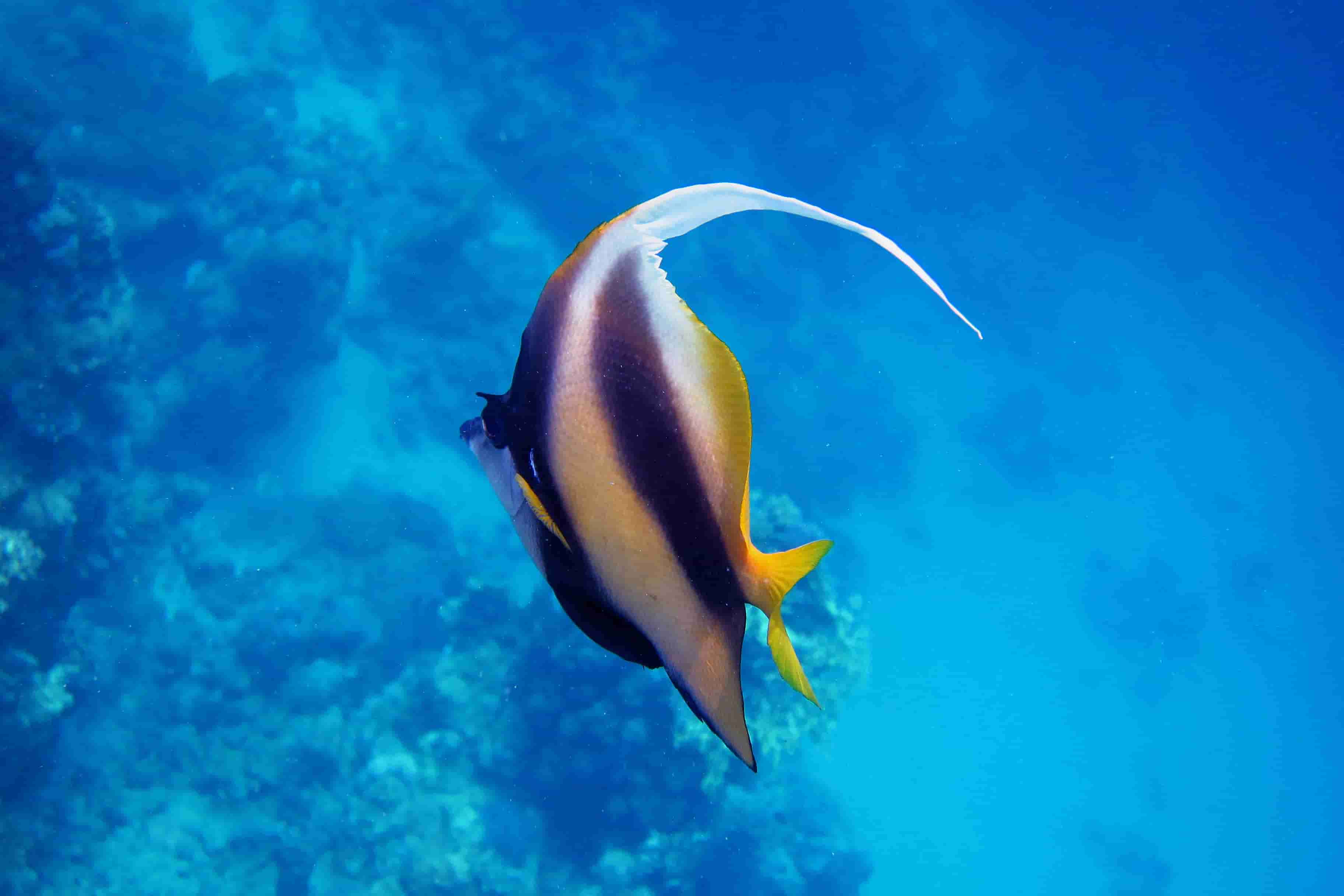
Pennant Coralfish are identified by the long white filament hanging off of their dorsal fin. Pennant Coralfish school with others of their own kind or swim in pairs, feeding on tiny zooplankton in the water column.
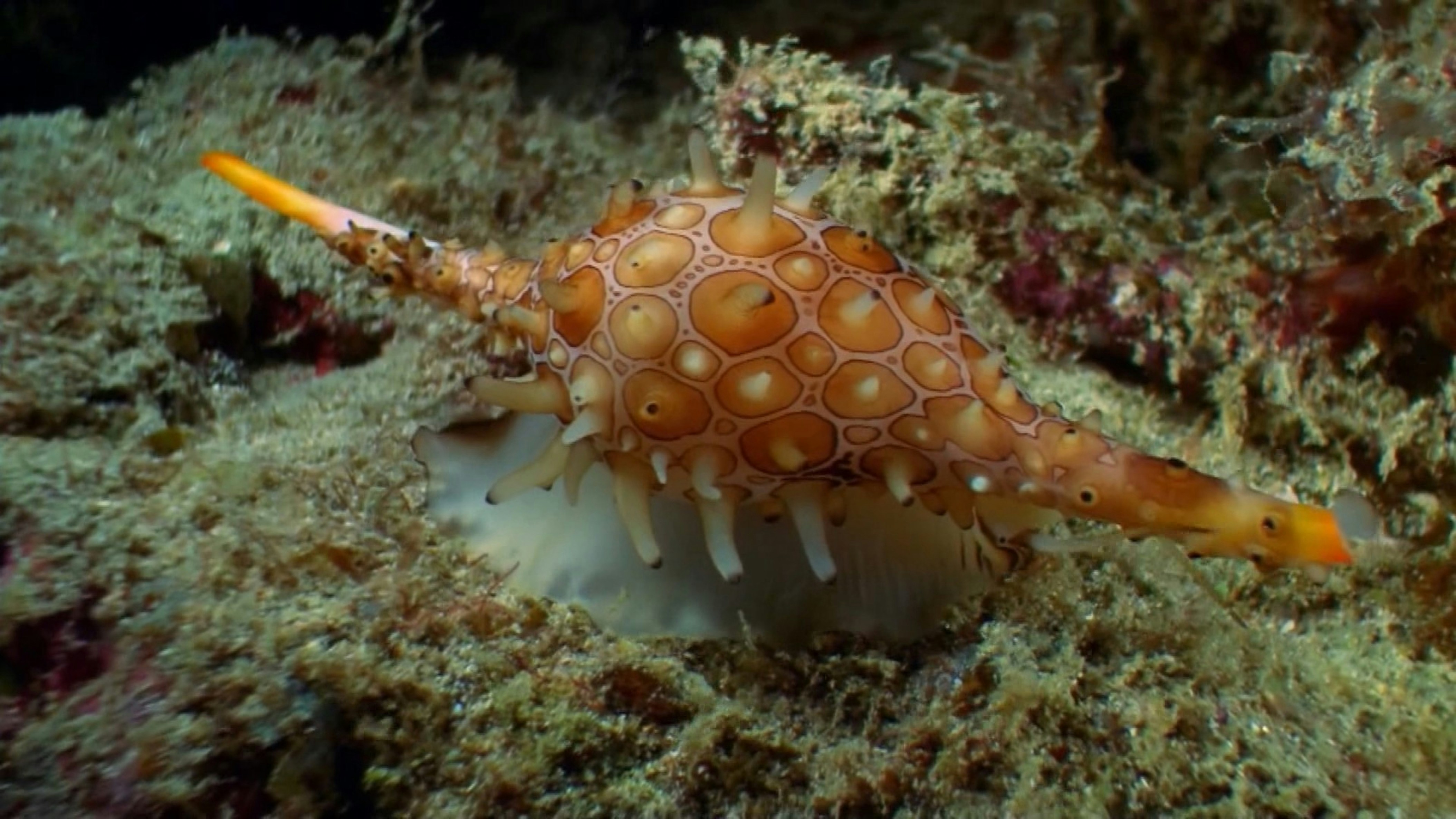
These creatures look like an underwater pincushion providing very good protection with their long brittle spines. They eat algae off rocks using their specially adapted mouth - it is called "Aristotle's lantern."
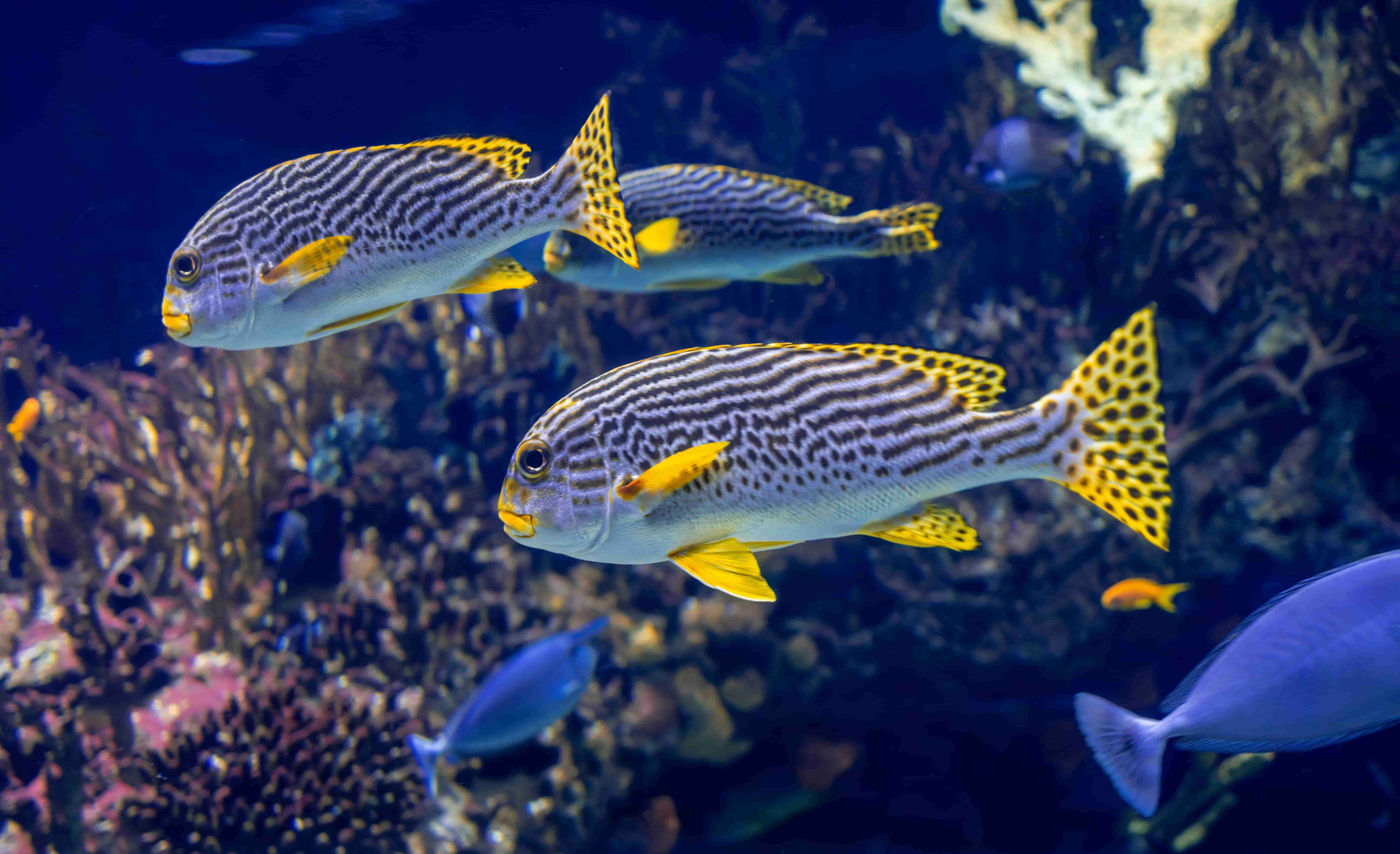
These fish have very large fleshy lips (that's where their name comes from). They undergo a huge transformation from the juvenile stage being solitary and having wild patterns, to the adult stage with relatively uniform stripes and living in large groups.
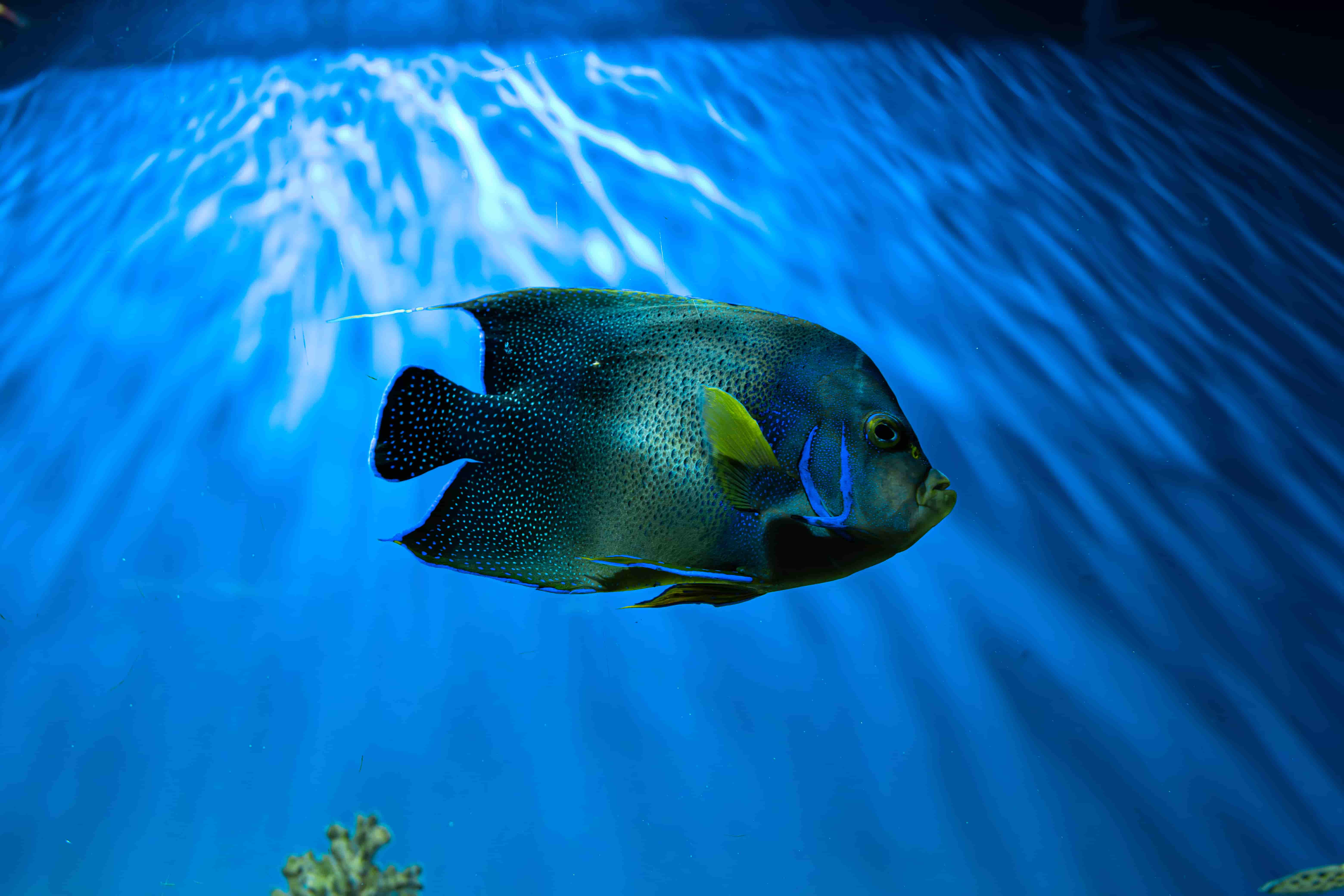
This angelfish species is known for its curiosity, boldness, and distinct semi-circle white lines on its body when young. The body is dark blue when young.
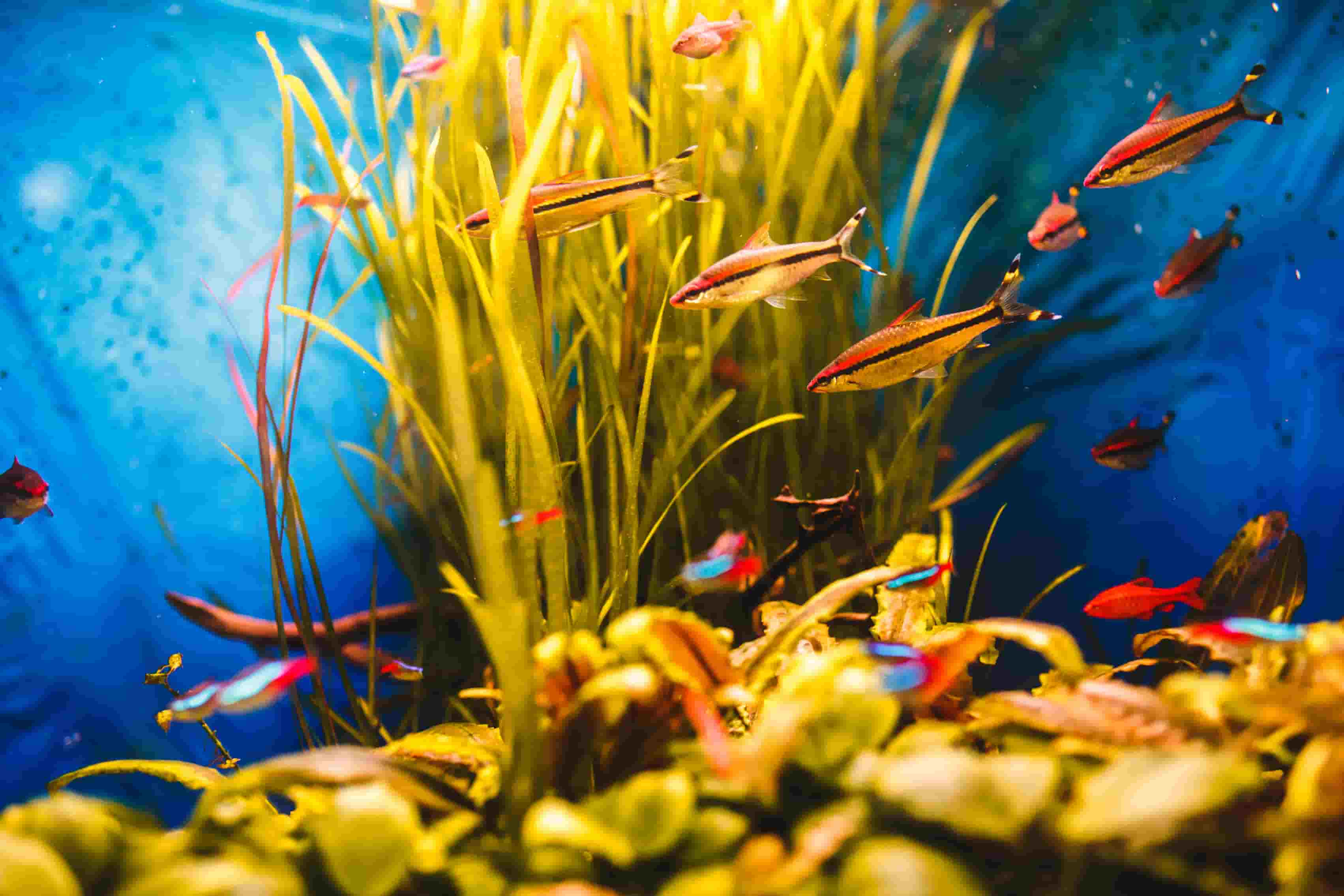
Lyretail Anthias are pink with orange and travel in large groups above the coral reef. All Anthias begin life as female; when the dominant male in a group dies, the largest female transitions from female to male.
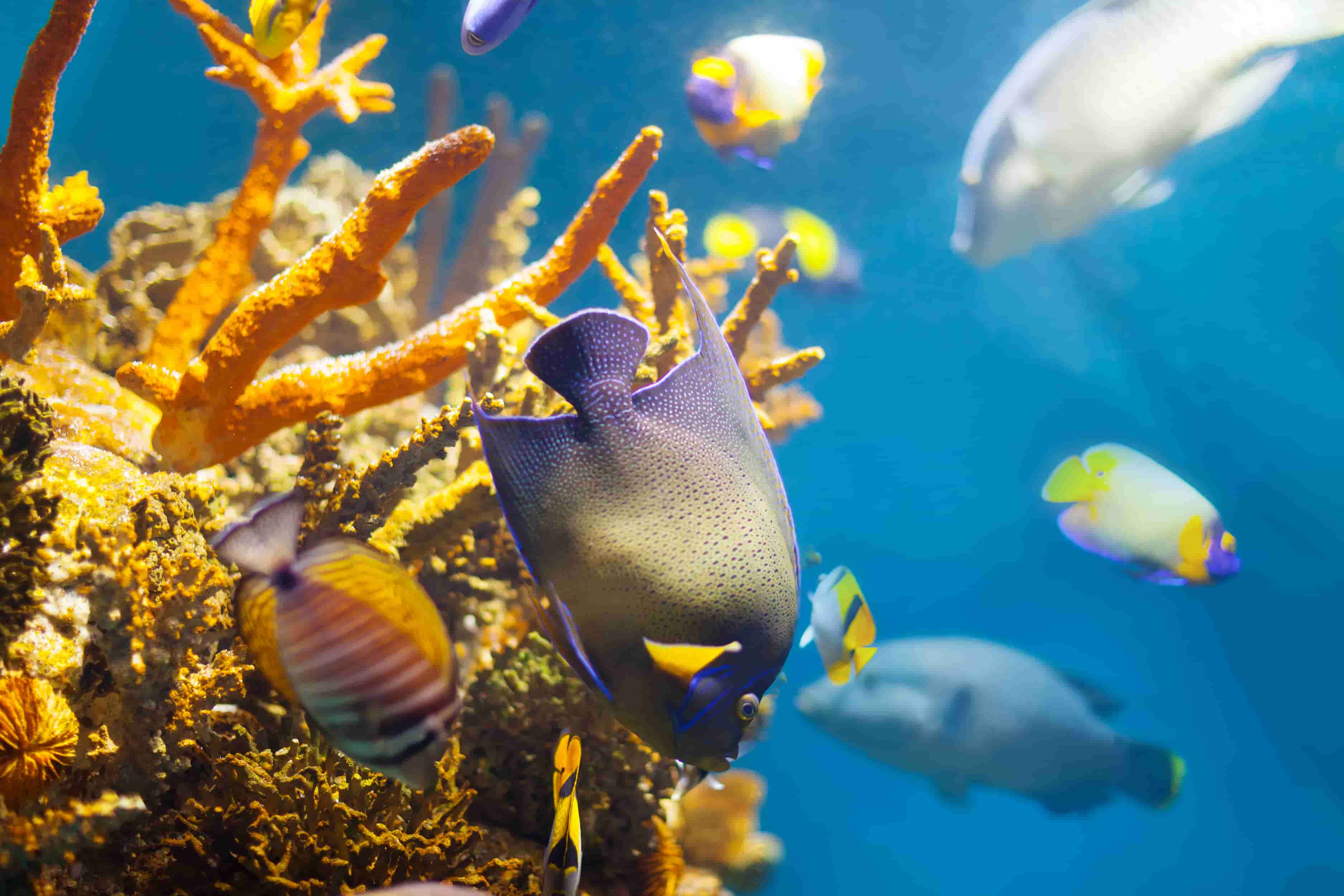
Parrotfish have beak-like mouths to scrape algae from hard coral. They actually create a lot of white sand on tropical beaches through their process of digestion.
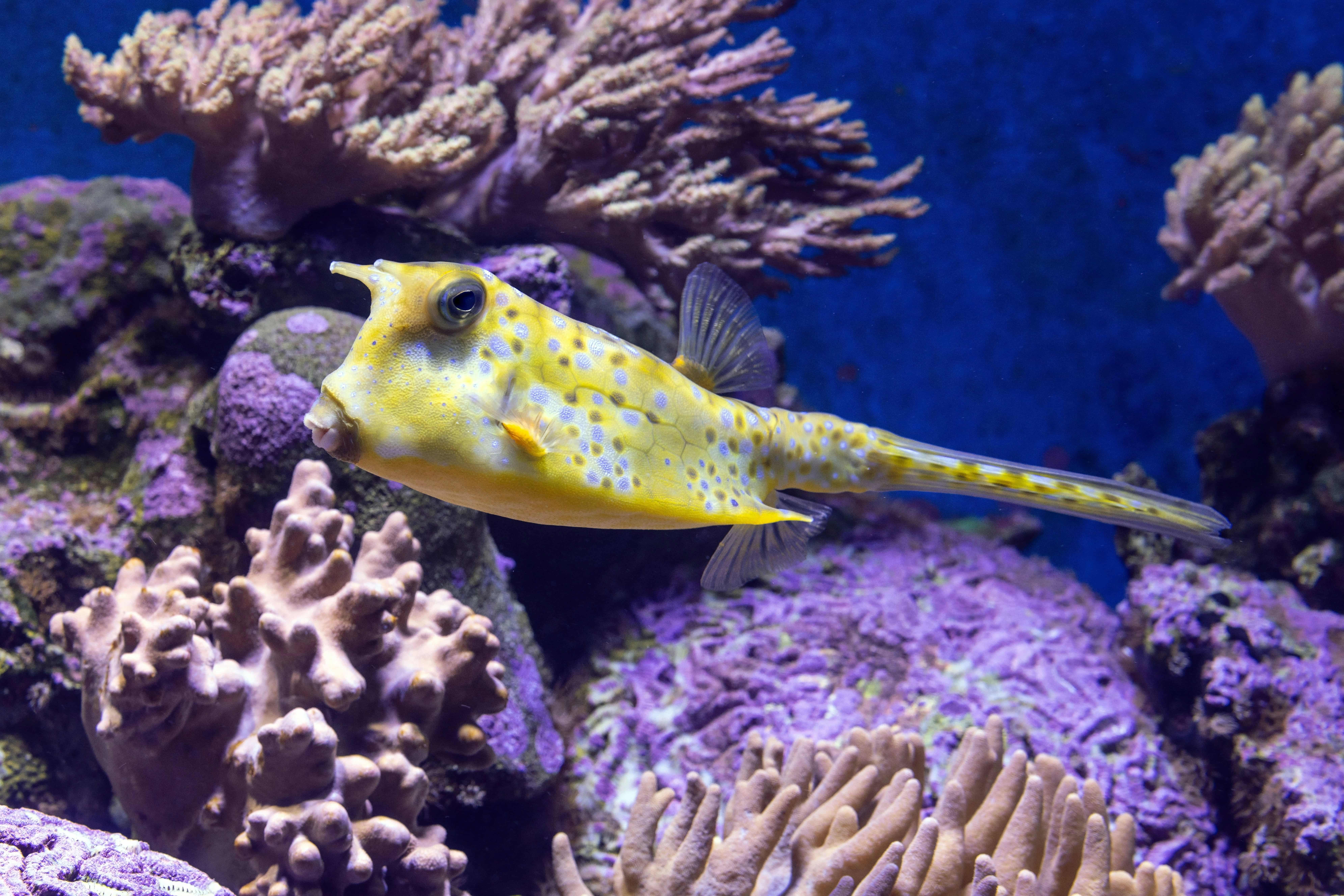
The Longhorn Cowfish has long protrusions from its head and has a box shape with a slow swimming ability. To compensate for its slow swimming, this fish has the ability to secrete a toxin from its skin to the surrounding water when feeling stress, which is a morbid way to remove itself from the gene pool by causing death.